If your child has been diagnosed with nearsightedness (myopia), you may be surprised to learn that there are ways to slow its progression.
You might also wonder: “Why wasn’t this discussed at my child’s last eye exam?”
This is a very common and very reasonable question.
The answer isn’t that doctors don’t care. It’s that the world children are growing up in has changed faster than traditional eye care models have adapted.
Myopia wasn’t always this common
For generations, myopia existed but at much lower rates. Glasses worked well, and most children simply needed stronger prescriptions as they grew.
What has changed dramatically is how children use their eyes every day.
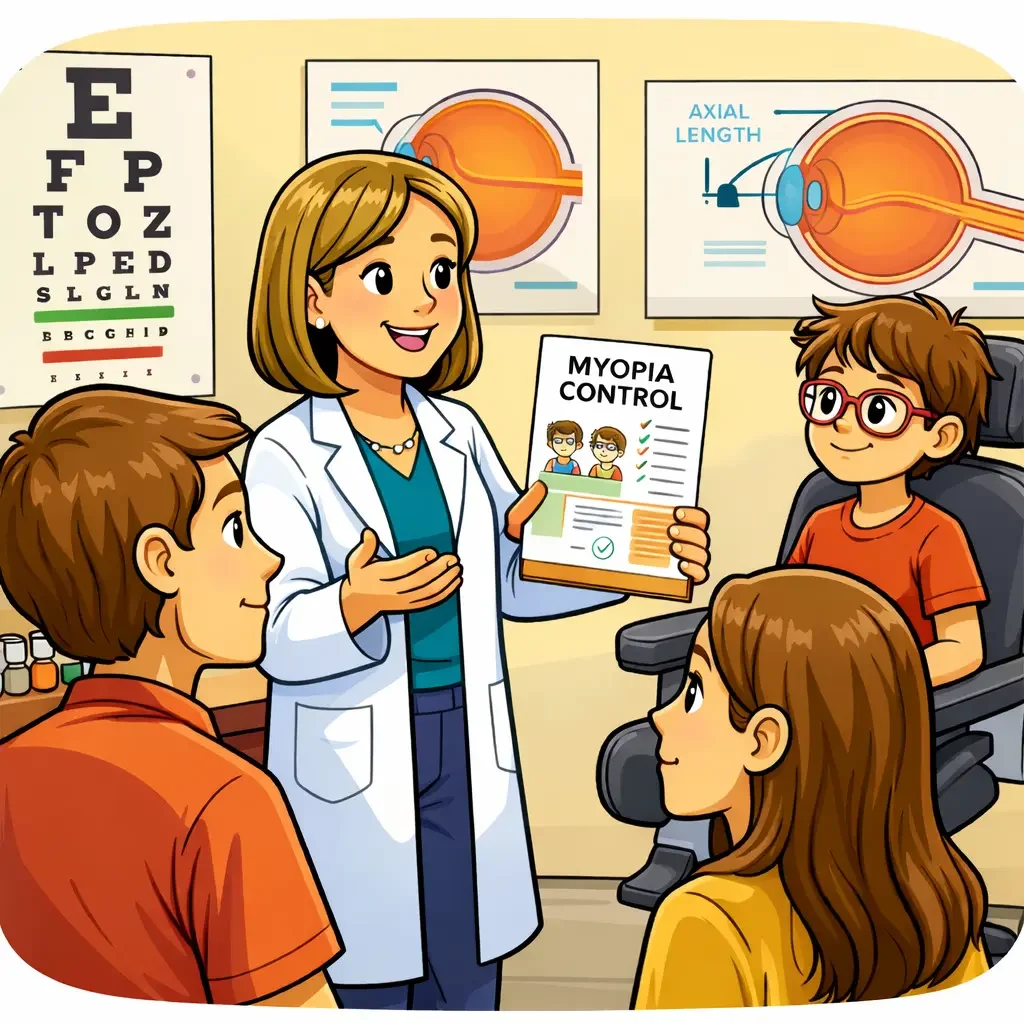
Children’s environments have changed
Today’s children experience:
more screen time and near work
less outdoor time
fewer visual breaks
Research shows outdoor time helps protect against myopia, while prolonged near work can accelerate progression. This means modern myopia is strongly influenced by environment and lifestyle, not just genetics.
Myopia is increasing at unprecedented rates
Myopia is now rising worldwide at levels never seen before. Children are:
becoming nearsighted earlier
progressing faster
reaching higher levels of myopia by adulthood
Higher myopia isn’t just “stronger glasses.” It is associated with a longer eye, which increases lifetime risk for:
retinal degeneration
retinal detachment
glaucoma
early cataracts
These risks are tied to how long the eye grows, not just how blurry vision is today.
Myopia has been corrected for over 700 years
For centuries, myopia was taught as:
a focusing issue
corrected with glasses or contacts
expected to worsen as a child grows
Because the science behind slowing progression was not well understood, doctors focused on updating prescriptions year to year. The idea that myopia is a **progressive eye disease—not just blurry vision—**is a much newer understanding.
Myopia control is newer than most parents realize
Treatments designed to slow myopia progression have been supported by research since the early 2000s. However:
many doctors were never trained in these treatments
some practices lack the time or equipment needed
myopia control is not yet required as a universal standard of care
As a result, adoption has been gradual.
Why slowing myopia matters
Myopia often progresses fastest in childhood. Higher levels of myopia are linked to increased lifetime risk of eye disease—not just stronger glasses. Slowing progression can help reduce these long-term risks.
Why it may not come up at every exam
Routine eye exams are often 10–15 minutes and focus on:
checking vision
updating glasses
screening eye health
True myopia management requires more time, education, and follow-up. Insurance also covers glasses but not myopia control, which makes these conversations harder in traditional exam settings.
What parents should know
If myopia control wasn’t discussed - it often reflects a traditional care model.
The good news is that awareness is growing, and parents now have more options than ever.
If you’re interested in myopia control:
ask if your child’s eye growth is being monitored
ask whether slowing progression is discussed
or seek out a practice that specializes in pediatric myopia management
If you’re looking for care that goes beyond routine eye exams, Innovative EyeCare focuses exclusively on myopia management. Our goal is to slow progression and reduce long-term eye health risks. Reach out to learn whether myopia control may be appropriate for your child.